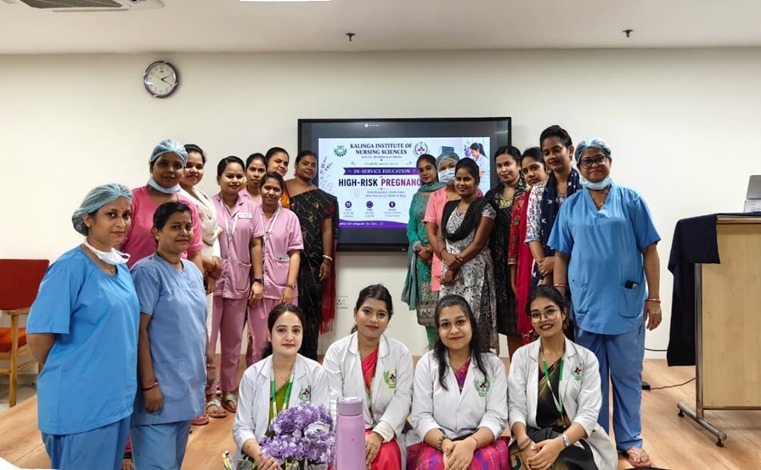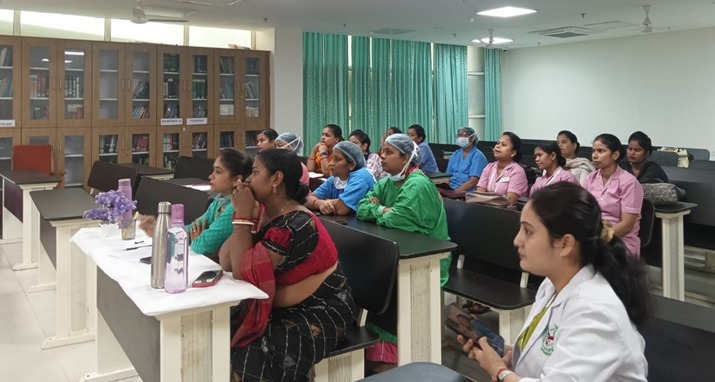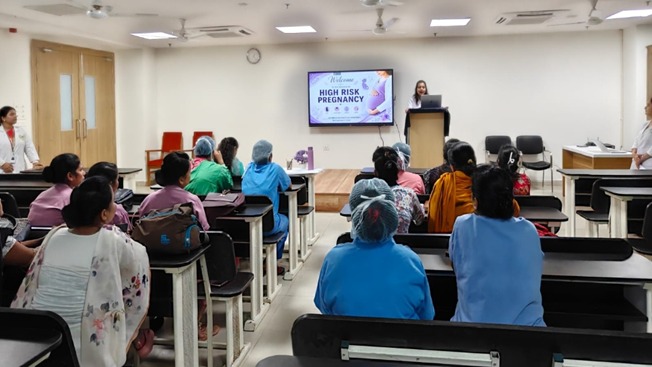

1st Year M.Sc. Nursing student of Obstetrics and Genecology department of Kalinga Institute of Nursing Sciences, KIIT-DU, organized in service education programme on ‘high-risk pregnancy’ at 1pm on 31st July, 2026. The session was held at Pradyumna Bal Memorial Hospital, E block, 2st floor, Seminar Room. The programme aimed to enhance the knowledge and skilful clinical preparedness in the early identification, monitoring, management, and timely referral of women with high-risk pregnancies among Nursing Officers and In-charges working in antenatal ward, postnatal ward, gynaecology ward, labour room, OBG emergency, and OBG operation theatre of PBMH.
The in-service education programme commenced with a warm welcome to all the dignitaries and participants. The session was inaugurated by seeking the blessings of the Almighty, followed by a keynote address delivered by Mrs.Rojalin Dash, Associate Professor, Department of Obstetrics and Gynaecological Nursing. The programme began with an enthusiastic welcome speech by Ms. Usosi Das, followed by a pre-test conducted by her to assess the baseline knowledge of the participants regarding high-risk pregnancy. The educational session was then carried forward by Ms. ParamitaGarai, followed by her presentation of learning objectives, concept of the topic, causes, and risk factors associated with high-risk pregnancy. Ms. TrishitaHajra delivered a comprehensive presentation on the common high-risk pregnancy conditions, including their clinical features, warning signs, complications, and evidence-based nursing management through interactive discussion and clinical examples, enabling the participants to strengthen their understanding of these conditions. The session on the management of high-risk pregnancy was presented by Ms. MeghaDey, with a discussion on hospital-based management, emergency preparedness, infection prevention, patient education, timely referral, and multidisciplinary collaboration. She subsequently conducted the post-test to evaluate the knowledge gained by the participants.
The programme remained highly interactive throughout the session. Nursing personnel actively participated in the discussions, shared their clinical experiences, and clarified their queries. The comparison of pre-test and post-test findings indicated an improvement in the participants’ understanding of the identification and management of high-risk pregnancy. The participants appreciated the relevance of the topic and expressed their interest in attending similar continuing nursing education programmes in the future.
The programme concluded successfully with the vote of thanks proposed by Mrs.AnusuyaBehera, Assistant Professor, Department of Obstetrics and Gynaecological Nursing. The enthusiastic involvement and cooperation of the nursing personnel made the In-Service Education Programme both informative and successful. The programme served as a valuable platform for knowledge enhancement, professional development, and strengthening evidence-based nursing practices to improve maternal and neonatal outcomes at KINS, KIIT-DU.